Anonymous
Apr 14, 2026
Rating: 5/5
Bluetooth LE works great
Using it for a wearable project. Battery efficiency is impressive and the Bluetooth range is sufficient for my needs.
Description
Reviews
| Brand | - |
| Category | Electronic Components / Maker DIY / Development Boards & Control Boards |
| Origin | - |
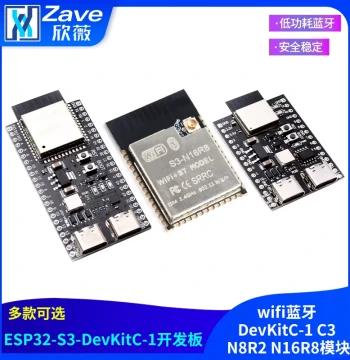
| Processor | Dual-Core Xtensa LX7 @ 240MHz |
| Flash Memory | 4MB Quad SPI |
| PSRAM | 2MB Octal SPI |
| Wireless Connectivity | Wi-Fi 802.11b/g/n & Bluetooth 5.0 LE |
| GPIO Count | 22 Programmable Pins |
| Interface | USB Type-C (UART & JTAG) |
| Operating Voltage | 3.3V Logic Level |
| Input Voltage | 5V via USB or VIN Pin |
| Dimensions | 25.4 x 17.8 x 3.2 mm |
| Software Support | Arduino IDE, ESP-IDF, MicroPython |
Anonymous
Apr 14, 2026
Rating: 5/5
Bluetooth LE works great
Using it for a wearable project. Battery efficiency is impressive and the Bluetooth range is sufficient for my needs.
Anonymous
Apr 14, 2026
Rating: 5/5
Great MicroPython Support
Flashed CircuitPython instantly. No drivers needed on Mac. The USB-C port makes it very convenient to use.
Anonymous
Apr 13, 2026
Rating: 5/5
Upgrade from ESP8266
Much faster processing. USB-C is a welcome change. Highly recommend for anyone looking to upgrade their old projects.
Anonymous
Apr 12, 2026
Rating: 5/5
Perfect for IoT Prototyping
Compact size fits everywhere. Wi-Fi connection is stable and setup was straightforward using the Arduino IDE.
Anonymous
Apr 01, 2026
Rating: 4/5
Good value but small pins
Board works well but soldering headers requires care due to size. Performance is excellent for the price point.
Q: What is the maximum current draw?
A: Typically 500mA peak depending on Wi-Fi usage. We recommend a stable 5V power supply.
Q: Does this come with headers soldered?
A: No, this is the bare module version. You will need to solder headers separately if required.
Q: Does it support external antenna?
A: No, this mini version uses the onboard PCB antenna only. There is no connector for an external antenna.
Q: Can I power it with a 3.7V LiPo battery?
A: Yes, connect to the 5V pin or use a dedicated battery pin if available on your carrier board.
Q: Is it compatible with Arduino IDE?
A: Yes, fully supported via the ESP32 board manager. You can find installation instructions in our wiki.