Anonymous
Apr 01, 2026
Rating: 5/5
Perfect for Arduino Projects
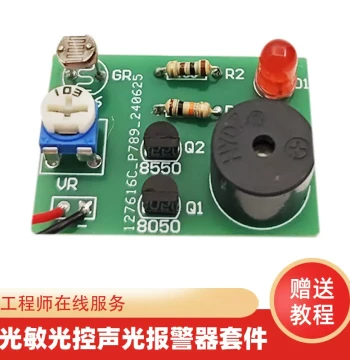
Works exactly as described. Easy to calibrate with the potentiometer. Used it for a night light project.
Description
Reviews
| Brand | - |
| Category | Electronic Components / Maker DIY / Computer Hardware, Monitors & Peripherals |
| Origin | - |
| Operating Voltage | DC 5V - 12V |
| Output Signal | Digital Switching Output (0 and 1) |
| Comparator Chip | LM393 |
| PCB Dimensions | 32mm x 14mm |
| Sensitivity Adjustment | Via Blue Potentiometer |
| Detection Range | Visible Light Spectrum |
| Indicator LEDs | Power and Trigger Status |
| Mounting Hole Size | 3mm Diameter |
| Material | FR-4 Fiberglass |
| Weight | Approx. 5 grams |
Anonymous
Apr 01, 2026
Rating: 5/5
Perfect for Arduino Projects
Works exactly as described. Easy to calibrate with the potentiometer. Used it for a night light project.
Anonymous
Mar 24, 2026
Rating: 3/5
Works but no headers included
The module functions well, but I was disappointed that pin headers were not included. Had to solder my own.
Anonymous
Mar 20, 2026
Rating: 4/5
Good value but sensitive
The sensor is very sensitive to light changes. Had to adjust the pot several times to get the threshold right. Good quality otherwise.

Anonymous
Feb 15, 2026
Rating: 5/5
Great for automation
Using this to trigger a relay when room gets dark. Very stable output signal. Highly recommend for beginners.
Anonymous
Jan 19, 2026
Rating: 5/5
Reliable Light Detection
I bought five of these for a line following robot that avoids dark areas. All modules performed consistently.
Q: What is the maximum current draw?
A: The module typically draws less than 20mA during operation.
Q: Is the output analog or digital?
A: This module provides a digital switching output (TTL). Some versions have analog out, but this specific one is digital.
Q: Can it detect infrared light?
A: No, this photoresistor is designed for visible light intensity detection, not IR.
Q: Can this module operate at 12V?
A: Yes, this module supports DC 5V and 12V input as specified in the title.
Q: Does it work with Raspberry Pi GPIO?
A: Yes, provided you connect the VCC to 3.3V or 5V and match the logic levels appropriately.