Anonymous
Mar 29, 2026
Rating: 5/5
Exceeded expectations
Very accurate brightness detection. I integrated this into a smart home system to control blinds, and it reacts instantly to sunlight changes. Great product for the price.
Description
Reviews
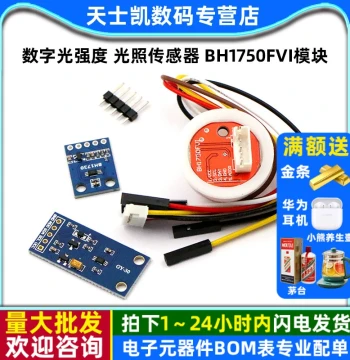
| Brand | - |
| Category | Robotics / STEM Teaching Tools / Sensors |
| Origin | - |
| Operating Voltage | 5V DC |
| Output Signal | Digital Switching (0 or 1) |
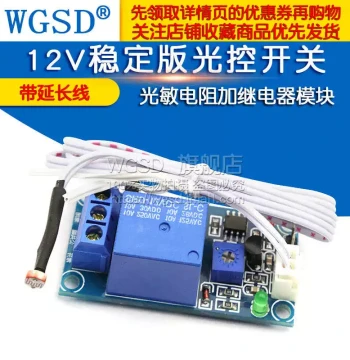
| Detection Component | Photoresistor (LDR) |
| Comparator Chip | LM393 |
| Sensitivity Adjustment | Potentiometer included |
| Pin Configuration | 3-Pin or 4-Pin options |
| Indicator LED | Power and Output status LEDs |
| PCB Size | 32mm x 14mm |
| Mounting Holes | 3mm diameter |
| Application Compatibility | Arduino, Raspberry Pi, ESP32 |
Anonymous
Mar 29, 2026
Rating: 5/5
Exceeded expectations
Very accurate brightness detection. I integrated this into a smart home system to control blinds, and it reacts instantly to sunlight changes. Great product for the price.
Anonymous
Mar 28, 2026
Rating: 4/5
Solid build quality
The PCB looks professional and the soldering points are clean. The only reason for 4 stars instead of 5 is that the header pins were not pre-soldered on my unit, but that's a minor inconvenience.
Anonymous
Mar 19, 2026
Rating: 5/5
Reliable and sensitive
I bought five of these for a robotics project. All of them performed consistently. The LM393 comparator provides a clean digital output which prevents flickering when the light level is near the threshold.
Anonymous
Mar 05, 2026
Rating: 5/5
Perfect for my night light project
This sensor module works exactly as described. The potentiometer makes it very easy to calibrate the sensitivity for different lighting conditions. I used it with an Arduino Uno to trigger an LED strip when the room gets dark.
Anonymous
Mar 01, 2026
Rating: 4/5
Good value, clear instructions needed
The hardware quality is solid and the response time is fast. However, beginners might struggle without a wiring diagram. Once I found a tutorial online, it worked flawlessly for my automatic garden lights.
Anonymous
Mar 01, 2026
Rating: 5/5
Great starter sensor
As someone new to electronics, this was very forgiving. The onboard LEDs help you visualize what the sensor is detecting before you even write code. Highly recommended for learning.
Q: Can I power this directly from a 3.3V pin on my ESP32?
A: While the logic output is compatible with 3.3V systems, the module is designed for 5V operation for optimal performance. We recommend powering it with 5V and connecting the output pin directly to your ESP32 GPIO.
Q: Are the header pins included in the package?
A: Yes, the package includes the PCB module and a set of male header pins that you can solder onto the board yourself. This allows for flexible mounting options.
Q: Does this module output analog or digital signals?
A: This specific module outputs a digital signal (HIGH or LOW) based on the threshold you set with the potentiometer. If you need analog values, you would need a different module with an AO pin.

Q: Is the sensitivity adjustable in complete darkness?
A: The potentiometer adjusts the threshold at which the switch triggers. You can tune it so that even a tiny amount of light triggers the sensor, or require brighter light, but it cannot detect light if there is absolutely zero photons hitting the LDR.
Q: What is the maximum current this sensor can switch?
A: The module itself is a low-power sensor intended for signal detection. It cannot drive high-current loads like motors directly. You should use the output signal to control a relay or transistor for heavier loads.