Anonymous
Mar 28, 2026
Rating: 5/5
Compact and effective
Small form factor fits perfectly into my custom enclosure. The mounting holes are standard size which made installation a breeze. Highly recommend for any light sensing application.
Description
Reviews
| Brand | - |
| Category | Robotics / STEM Teaching Tools / Sensors |
| Origin | - |
| Operating Voltage | 3.3V - 5V DC |
| Output Type | Digital Switch Output (0 and 1) |
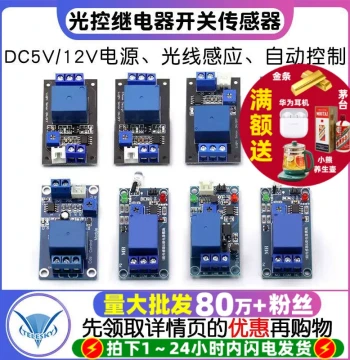
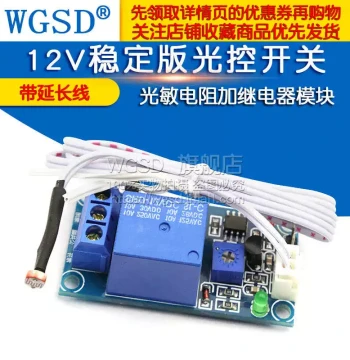
| Detection Component | Photoresistor (LDR) |
| Pin Configuration | 4-Pin (VCC, GND, DO, AO) |
| Adjustable Sensitivity | Yes, via Potentiometer |
| Comparator Chip | LM393 |
| Board Size | 32mm x 14mm |
| Mounting Hole Diameter | 3mm |
| Compatibility | Arduino, Raspberry Pi, STM32 |
| Application | Light intensity detection, Smart lighting control |
Anonymous
Mar 28, 2026
Rating: 5/5
Compact and effective
Small form factor fits perfectly into my custom enclosure. The mounting holes are standard size which made installation a breeze. Highly recommend for any light sensing application.
Anonymous
Mar 25, 2026
Rating: 5/5
Perfect for my Arduino project
This sensor module works exactly as described. The potentiometer makes it very easy to calibrate the sensitivity for different lighting conditions. I used it to build a night light that turns on automatically when the room gets dark.
Anonymous
Mar 20, 2026
Rating: 4/5
Works well with 3.3V logic
Tested this with an ESP32 running at 3.3V and it performed flawlessly. The output voltage levels are compatible. Just wish the cable was included, but that's minor.
Anonymous
Mar 15, 2026
Rating: 5/5
Exceeded expectations
Very stable readings even in fluctuating light environments. The ability to read both analog values and digital triggers gives great flexibility for coding logic.
Anonymous
Mar 14, 2026
Rating: 5/5
Reliable and sensitive
I bought ten of these for a classroom workshop. All of them worked out of the box. The response time to light changes is quick, and the LM393 comparator provides a clean digital signal.
Anonymous
Mar 09, 2026
Rating: 4/5
Good value, clear instructions needed
The hardware quality is solid and the pins are well-soldered. However, beginners might struggle without a tutorial on how to wire the analog vs digital outputs. Once figured out, it performs great.
Q: Does this module provide an analog output or only digital?
A: This module provides both! You can read the varying voltage from the AO (Analog Output) pin or use the DO (Digital Output) pin for a simple high/low signal based on your threshold setting.

Q: Is this compatible with Raspberry Pi GPIO pins?
A: Yes, it is compatible. Since the Pi uses 3.3V logic, ensure you power the module with 3.3V. You can connect the DO pin directly to a GPIO input pin for digital reading.
Q: How do I adjust the sensitivity of the light detection?
A: There is a blue potentiometer on the board. Use a small screwdriver to rotate it clockwise or counter-clockwise while exposing the sensor to your target light level until the indicator LED behaves as desired.
Q: Can this sensor detect infrared light?
A: This module uses a standard photoresistor which is primarily sensitive to visible light. It is not optimized for detecting infrared (IR) signals; for IR, we recommend our dedicated IR receiver modules.
Q: What is the maximum voltage this sensor can handle?
A: The recommended operating voltage is between 3.3V and 5V DC. Please do not exceed 5V to avoid damaging the comparator chip or the photoresistor.