Anonymous
Mar 26, 2026
Rating: 5/5
Bulk purchase success
Ordered ten units for our makerspace workshop. All of them worked out of the box. Students found them easy to wire up and start coding immediately. Will buy again.
Description
Reviews
| Brand | - |
| Category | Robotics / STEM Teaching Tools / Sensors |
| Origin | - |
| Model Number | ACS712 |
| Sensor Type | Hall Effect Current Sensor |
| Available Ranges | 5A, 20A, 30A |
| Operating Voltage | 5V DC |
| Output Sensitivity (5A) | 185 mV/A |
| Output Sensitivity (20A) | 100 mV/A |
| Output Sensitivity (30A) | 66 mV/A |
| Bandwidth | 80 kHz |
| Response Time | 5 µs |
| Interface | Analog Output |
Anonymous
Mar 26, 2026
Rating: 5/5
Bulk purchase success
Ordered ten units for our makerspace workshop. All of them worked out of the box. Students found them easy to wire up and start coding immediately. Will buy again.
Anonymous
Mar 23, 2026
Rating: 5/5
Perfect for Arduino Projects
This sensor module works flawlessly with my Arduino Uno. The readings are stable and the calibration was straightforward using the provided library examples. Great value for the price.
Anonymous
Mar 12, 2026
Rating: 5/5
Compact and Reliable
I used the 20A version for a robotic arm motor driver. It fits perfectly in tight spaces and provides real-time current feedback without any lag. Highly recommended for robotics applications.
Anonymous
Mar 12, 2026
Rating: 5/5
Essential for Solar Monitoring
Using this to monitor the output of my small solar panel setup. The isolation provided by the Hall effect technology gives me peace of mind. Easy to integrate with ESP32.
Anonymous
Mar 11, 2026
Rating: 4/5
Great for learning
Bought this for my university embedded systems course. It helped me understand how current sensing works practically. The documentation online is plentiful which helped a lot.
Anonymous
Mar 08, 2026
Rating: 4/5
Good accuracy, needs filtering
The sensor is accurate enough for my home energy monitor project. I did have to add some software filtering to smooth out the noise, but that is expected with analog sensors. Solid build quality.
Q: What is the maximum voltage this module can handle on the input side?
A: The module itself measures current, not voltage. However, the primary conductor path is isolated. Please refer to the specific datasheet for isolation voltage ratings, typically around 2.1kV RMS, but ensure your circuit voltage does not exceed safe limits for your PCB traces.
Q: How do I calibrate the zero-point offset?
A: With no current flowing through the sensor, measure the output voltage. It should be approximately half of your supply voltage (e.g., 2.5V for a 5V supply). Use this value as your 'zero' baseline in your code and subtract it from future readings to calculate the actual current.
Q: Can this sensor measure AC current as well as DC?
A: Yes, the ACS712 module can measure both AC and DC current. The output voltage will vary around the VCC/2 baseline depending on the direction and magnitude of the current flow.
Q: Does this come with screw terminals or do I need to solder wires?
A: This specific LSSZ board features heavy-duty copper pads for high-current connections. While you can solder wires directly, we recommend using high-temperature solder and thick gauge wire. Some variants may include screw terminals, so please check the product images carefully before ordering.
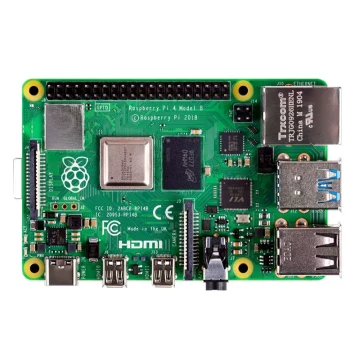
Q: Is there a library available for Raspberry Pi?
A: Since this is an analog sensor, it cannot connect directly to the GPIO pins of a standard Raspberry Pi which are digital. You will need an external ADC (Analog-to-Digital Converter) like the MCP3008. Once connected via SPI, you can use standard Python libraries to read the data.