Anonymous
Mar 12, 2026
Rating: 4/5
Good value, easy integration
Used this to automate my desk lamp based on ambient light. It responds quickly to changes. Only minor issue was the pin headers were slightly loose, but a quick solder fixed it.
Description
Reviews
| Brand | - |
| Category | Robotics / STEM Teaching Tools / Sensors |
| Origin | - |
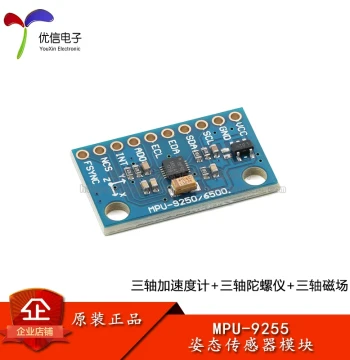
| Sensor Type | BH1750 Digital Illuminance Sensor |
| Interface | I2C (Inter-Integrated Circuit) |
| Operating Voltage | 3.3V - 5V DC |
| Measurement Range | 1 - 65535 Lux |
| Resolution | 1 Lux |
| Spectral Response | Close to Human Eye Sensitivity |
| Communication Protocol | Standard I2C Bus |
| Board Dimensions | 22mm x 18mm x 3mm |
| Compatibility | Arduino, Raspberry Pi, ESP8266, ESP32 |
| Application | Smart Lighting, Display Backlight Control, Agriculture Monitoring |
Anonymous
Mar 12, 2026
Rating: 4/5
Good value, easy integration
Used this to automate my desk lamp based on ambient light. It responds quickly to changes. Only minor issue was the pin headers were slightly loose, but a quick solder fixed it.
Anonymous
Mar 12, 2026
Rating: 5/5
Accurate and Fast
The response time is impressive. I used it for a camera exposure control project, and the lux readings are precise enough to make real-time adjustments.
Anonymous
Mar 09, 2026
Rating: 4/5
Works well for greenhouse monitoring
Using this to track sunlight exposure for my plants. It handles the humidity in the greenhouse fine so far. Would give 5 stars if it came with a waterproof casing option.
Anonymous
Mar 03, 2026
Rating: 5/5
Perfect for Arduino Projects
This BH1750 module works flawlessly with my Arduino Uno. The library support is excellent, and reading lux values was straightforward. Great accuracy for indoor lighting measurements.
Anonymous
Mar 02, 2026
Rating: 5/5
Great for beginners
As someone new to sensors, this was very easy to set up. Plenty of tutorials online. The data seems consistent when compared to my phone's light meter app.
Anonymous
Mar 01, 2026
Rating: 5/5
Reliable I2C communication
Integrated multiple units on the same bus without conflicts by adjusting addresses. Very stable readings over long periods. Highly recommended for IoT weather stations.
Q: Does this come with example code for Raspberry Pi?
A: While we do not include physical code sheets, our product page provides links to GitHub repositories with Python and C++ examples for Raspberry Pi and Arduino.
Q: How do I change the I2C address if I need two sensors?
A: Some versions of this module have an ADDR pin. Connecting this pin to VCC or GND changes the I2C address. Please check the specific schematic provided in the download section for your batch.
Q: What is the maximum distance for the I2C connection?
A: For reliable I2C communication, keep the wires short, ideally under 30cm. For longer distances, you may need an I2C extender or buffer.
Q: Can this sensor be used directly with 5V logic without a level shifter?
A: Yes, the BH1750 module typically includes voltage regulation and can operate directly with 3.3V or 5V microcontrollers like Arduino Uno.
Q: Is the sensor sensitive enough to measure moonlight?
A: The BH1750 has a range starting from 1 Lux. Moonlight is often below 1 Lux, so while it might register minimal values, it is optimized for indoor and daylight conditions rather than very low-light night scenarios.