Anonymous
Mar 18, 2026
Rating: 5/5
Perfect for my weather station
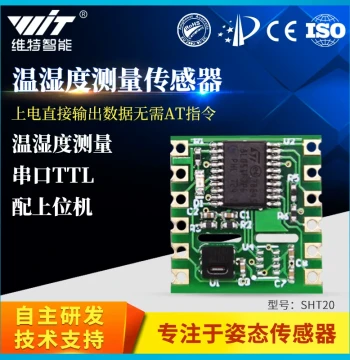
This sensor works flawlessly with my Arduino Uno. The readings are consistent and match my professional hygrometer closely. Easy to wire up and the library support is excellent.
Description
Reviews
| Brand | - |
| Category | Robotics / STEM Teaching Tools / Sensors |
| Origin | - |
| Model Number | DHT22 (AM2302) |
| Interface | Single-Bus Digital |
| Temperature Range | -40°C to +80°C |
| Humidity Range | 0% to 100% RH |
| Temperature Accuracy | ±0.5°C |
| Humidity Accuracy | ±2% RH |
| Sampling Period | 2 seconds |
| Operating Voltage | 3.3V to 6V DC |
| Pin Count | 4 Pins |
| Application | Arduino, Raspberry Pi, IoT Projects |
Anonymous
Mar 18, 2026
Rating: 5/5
Perfect for my weather station
This sensor works flawlessly with my Arduino Uno. The readings are consistent and match my professional hygrometer closely. Easy to wire up and the library support is excellent.
Anonymous
Mar 16, 2026
Rating: 4/5
Works well for plant monitoring
Using this to monitor humidity in my small greenhouse setup. It handles the moisture levels well, though I added a small filter cloth to protect it from direct water spray.
Anonymous
Mar 13, 2026
Rating: 5/5
Standard for a reason
The DHT22 is a classic for a reason. Stable readings, low power consumption, and very affordable. Highly recommend for any home automation project involving climate data.
Anonymous
Mar 11, 2026
Rating: 5/5
Easy for beginners
As someone new to electronics, I was worried about wiring this up. The pinout is clear, and there are tons of tutorials online. Got it working in under 10 minutes.
Anonymous
Mar 02, 2026
Rating: 4/5
Good value, slow sampling
Great accuracy for the price point. Just remember that it only updates every 2 seconds, so it's not suitable for rapid change monitoring. Otherwise, a solid component.
Anonymous
Mar 01, 2026
Rating: 5/5
Reliable and robust
I have used these in three different projects now. They are much more reliable than the DHT11 version. The plastic housing feels durable enough for indoor use.
Q: What is the difference between DHT11 and DHT22?
A: The DHT22 offers better accuracy and a wider temperature and humidity range compared to the DHT11. However, the DHT22 has a slower sampling rate (2s vs 1s).
Q: Is this sensor waterproof?
A: No, the DHT22 module is not waterproof. It should only be used in dry indoor environments or protected enclosures. Direct exposure to water will damage the sensor.
Q: Does this come with a pull-up resistor?
A: Most modules include a built-in pull-up resistor on the data line. If you are using the bare sensor component without a PCB module, you will need to add an external 10k resistor.
Q: How long is the cable included?
A: This item is sold as a standalone module or component and does not include extension cables. You will need to solder your own wires or purchase jumper cables separately.
Q: Can I use this with a 5V Raspberry Pi GPIO?
A: Yes, but it is recommended to use a voltage divider or a level shifter on the data line since the sensor operates best at 3.3V logic, although it can tolerate 5V power input.