Anonymous
Apr 13, 2026
Rating: 4/5
Solid board, learning curve exists
Hardware is top notch. Documentation is improving but requires some patience if you are new to Bouffalo chips. TinyML examples work well.
Description
Reviews
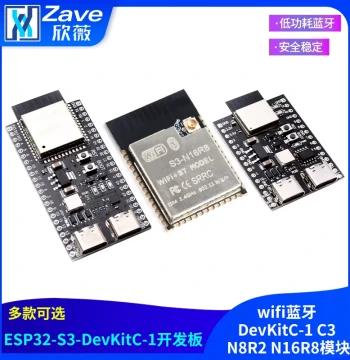
| Brand | - |
| Category | Electronic Components / Maker DIY / Development Boards & Control Boards |
| Origin | - |
| CPU Architecture | RISC-V BL616 |
| Wireless Connectivity | Wi-Fi 6 & Bluetooth 5.3 |
| Flash Memory | 8MB PSRAM |
| Interface Ports | USB Type-C, GPIO, SPI, I2C |
| Input Voltage | 5V DC via USB |
| Board Dimensions | 25.4 x 17.8 mm |
| Weight | 3.5 grams |
| Operating Temperature | -40°C to 85°C |
| SDK Support | Bouffalo Lab SDK, Zephyr RTOS |
| Hardware License | Open Source Hardware |
Anonymous
Apr 13, 2026
Rating: 4/5
Solid board, learning curve exists
Hardware is top notch. Documentation is improving but requires some patience if you are new to Bouffalo chips. TinyML examples work well.
Anonymous
Mar 25, 2026
Rating: 5/5
Great for TinyML
Running simple neural networks on this board is surprisingly smooth. Low power consumption is a huge plus for battery projects.
Anonymous
Mar 19, 2026
Rating: 5/5
Excellent for IoT Prototyping
The Wi-Fi 6 connectivity is stable and the RISC-V core handles my sensor data logging perfectly. Great value for the price.
Anonymous
Mar 08, 2026
Rating: 4/5
Good starter board
USB-C makes it easy to power. Wish it came with header pins soldered, but overall a great purchase for learning embedded AI.
Anonymous
Feb 16, 2026
Rating: 5/5
Tiny but powerful
Impressed by the form factor. Fits easily into small enclosures. Bluetooth pairing was seamless with my phone app.
Q: Does it support OTA updates?
A: Yes, Over-The-Air firmware updates are supported via Wi-Fi.
Q: What is the maximum current draw?
A: Peak current is approximately 350mA during Wi-Fi transmission.
Q: Can I use this with Arduino IDE?
A: Currently, we recommend using the Bouffalo Lab SDK or Zephyr. Arduino support is community-driven.
Q: Is MicroPython supported on this board?
A: Yes, MicroPython and Lua are supported via the official SDK.
Q: Are the schematics publicly available?
A: Yes, this is an open-source hardware project. Files are on our GitHub repository.