Anonymous
Mar 10, 2026
Rating: 5/5
Great for Arduino Projects
Easy to integrate with my Arduino Uno. The analog output is stable and the sample code helped me get started quickly.
Description
Reviews
| Brand | - |
| Category | Electronic Components / Maker DIY / Computer Hardware, Monitors & Peripherals |
| Origin | - |
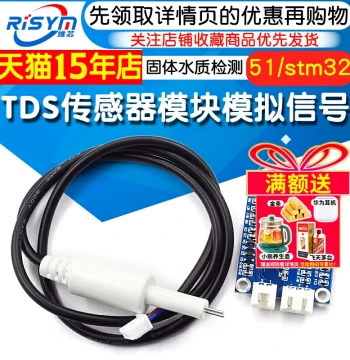
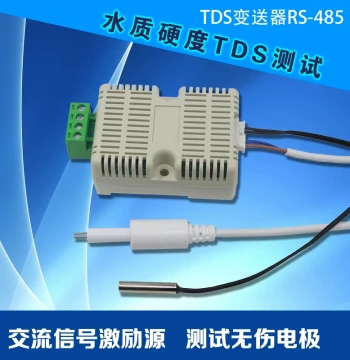
| Operating Voltage | 3.3V to 5V DC |
| Output Type | Analog Voltage Output |
| Interface Connector | PH2.0-3Pin |
| Detection Range | 0 to 1000 NTU (Estimated) |
| Response Time | Less than 500ms |
| Operating Temperature | 0°C to 50°C |
| Storage Temperature | -20°C to 80°C |
| Probe Cable Length | 1.5 Meters |
| PCB Dimensions | 60mm x 35mm x 15mm |
| Microcontroller Compatibility | Arduino, ESP32, STM32, Raspberry Pi |
Anonymous
Mar 10, 2026
Rating: 5/5
Great for Arduino Projects
Easy to integrate with my Arduino Uno. The analog output is stable and the sample code helped me get started quickly.
Anonymous
Mar 02, 2026
Rating: 5/5
Fast Shipping
Arrived in good condition and well packaged. The probe looks durable and the cable is flexible.

Anonymous
Feb 22, 2026
Rating: 3/5
Code needs work
Hardware is ok, software examples are a bit basic. Had to write my own filtering algorithm for stable readings.
Anonymous
Feb 05, 2026
Rating: 5/5
Accurate Readings
Comparing with lab results shows decent correlation for general monitoring. Perfect for my aquarium setup.
Anonymous
Jan 27, 2026
Rating: 4/5
Good value
Works well after calibration. You need to spend some time setting baseline values for your specific water source.
Q: What should I use for calibration?
A: We recommend using distilled water for the zero point and a standard turbidity solution for the second point.
Q: Is the library included in the package?
A: Sample code is provided via a download link in the manual. It is not a physical library but digital files.
Q: Is this compatible with Raspberry Pi?
A: Yes, but since Raspberry Pi lacks analog inputs, you will need an external ADC module like the MCP3008.
Q: What is the current consumption?
A: The module draws approximately 20mA during operation, which is suitable for most microcontroller pins.
Q: Is the probe waterproof?
A: Yes, the probe head is waterproof and suitable for immersion. The circuit board itself should not be submerged.