Anonymous
Apr 09, 2026
Rating: 5/5
Perfect for my Arduino Robot
Works flawlessly with my Arduino Uno project. The sensitivity adjustment potentiometer makes it easy to calibrate for different surfaces. Highly recommend for beginners.
Description
Reviews
| Brand | - |
| Category | Electronic Components / Maker DIY / Computer Hardware, Monitors & Peripherals |
| Origin | - |
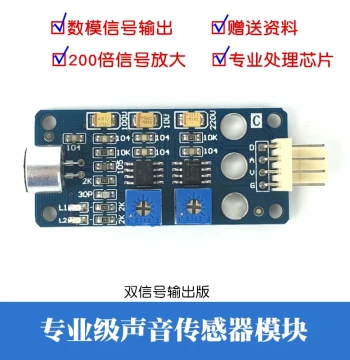
| Operating Voltage | DC 3.3V - 5V |
| Detection Distance | 2cm - 30cm (Adjustable) |
| Output Signal | Digital Switching Output (0 and 1) |
| Indicator LED | Power LED & Output Status LED |
| Comparator Chip | LM393 Wide Voltage Comparator |
| PCB Dimensions | 32mm x 14mm |
| Mounting Hole Diameter | 3mm |
| Operating Temperature | -10°C to +50°C |
| Current Consumption | < 30mA |
| Package Includes | 1 x Sensor Module, 1 x Dupont Cable |
Anonymous
Apr 09, 2026
Rating: 5/5
Perfect for my Arduino Robot
Works flawlessly with my Arduino Uno project. The sensitivity adjustment potentiometer makes it easy to calibrate for different surfaces. Highly recommend for beginners.
Anonymous
Mar 28, 2026
Rating: 5/5
Great for line tracking
Very responsive to black tape on white surfaces. The output LED is helpful for debugging without connecting to a microcontroller.
Anonymous
Mar 19, 2026
Rating: 3/5
Range is limited
Works okay for close range obstacle avoidance, but don't expect long-distance detection. It serves its purpose for small smart cars.
Anonymous
Mar 18, 2026
Rating: 4/5
Good value for money
Sensitive but needs tuning depending on ambient light. Once calibrated, it tracks lines very well. Shipping was fast.
Anonymous
Feb 02, 2026
Rating: 5/5
Fast Delivery
Exactly as pictured and described. The build quality is solid for the price point. I bought five for a multi-sensor array.
Q: What is the logic level of the output?
A: The output is digital TTL logic. It outputs LOW when an obstacle is detected and HIGH when no obstacle is present.
Q: Can this sensor work in direct sunlight?
A: Infrared interference may occur in strong direct sunlight. We recommend testing in controlled lighting conditions for best results.
Q: How many pins does this module have?
A: The module typically has 4 pins: VCC, GND, DO (Digital Output), and AO (Analog Output, though primarily used for digital switching).
Q: How do I adjust the detection range?
A: There is a blue potentiometer on the board. Turn it clockwise to increase sensitivity and counter-clockwise to decrease it.
Q: Is this compatible with Raspberry Pi GPIO?
A: Yes, this module operates at 3.3V to 5V, making it fully compatible with Raspberry Pi GPIO pins.