Anonymous
Apr 07, 2026
Rating: 4/5
Great value, tiny pins
Works well with Arduino IDE. Only downside is the pins are very close together, so soldering headers requires a steady hand.
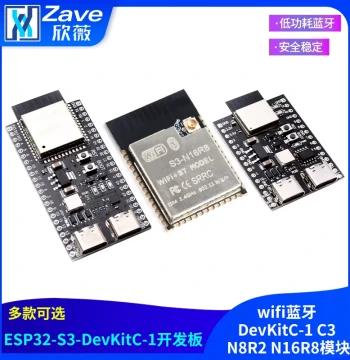
Description
Reviews
| Brand | - |
| Category | Electronic Components / Maker DIY / Development Boards & Control Boards |
| Origin | - |
| Chip Model | ESP32-C3 |
| CPU Frequency | 160 MHz |
| Flash Memory | 4 MB |
| SRAM | 400 KB |
| Wireless Connectivity | Wi-Fi 2.4 GHz & Bluetooth 5 (LE) |
| GPIO Count | 22 Programmable GPIOs |
| Operating Voltage | 3.3V |
| Interface | USB Type-C |
| Dimensions | 19.5 x 10.5 x 2.5 mm |
| Weight | 3.2 grams |
Anonymous
Apr 07, 2026
Rating: 4/5
Great value, tiny pins
Works well with Arduino IDE. Only downside is the pins are very close together, so soldering headers requires a steady hand.
Anonymous
Feb 17, 2026
Rating: 3/5
Good board, learning curve
Hardware is solid. Took me some time to configure the board manager in the IDE. Would be nice to have a quick start guide included.
Anonymous
Feb 10, 2026
Rating: 5/5
Easy to program
Plug and play via USB-C. No need for external programmers. The RISC-V architecture is fast enough for my home automation needs.
Anonymous
Feb 07, 2026
Rating: 5/5
Perfect for compact IoT projects
This SuperMini board is incredibly small yet powerful. Wi-Fi connection is stable and Bluetooth LE works flawlessly with my sensors.
Anonymous
Feb 06, 2026
Rating: 5/5
Low power consumption
Running on battery for weeks now. The deep sleep modes on the C3 chip are very efficient. Highly recommend for wireless sensors.
Q: Is this compatible with the Arduino IDE?
A: Yes, it is fully compatible. You need to install the ESP32 board package by Espressif.
Q: How many PWM channels are available?
A: The ESP32-C3 supports up to 6 PWM channels suitable for LED control or servos.
Q: Can I use MicroPython on this?
A: Yes, MicroPython and CircuitPython are both supported on the ESP32-C3 chip.
Q: Does it have an external antenna connector?
A: No, this SuperMini version uses an onboard PCB antenna for compactness.
Q: What is the input voltage range?
A: The board accepts 5V via USB-C. The onboard regulator outputs 3.3V for the chip.