Anonymous
Apr 09, 2026
Rating: 5/5
Fast delivery
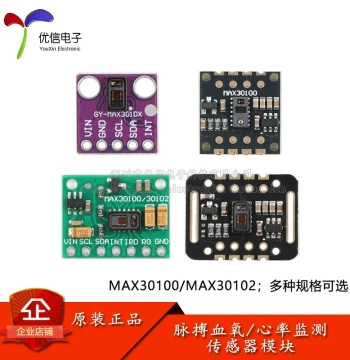
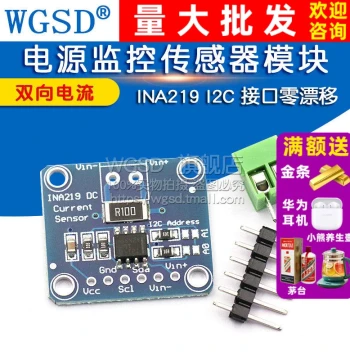
Exactly as described. The breakout board is compact and fits well into my custom enclosure. Libraries available online make integration straightforward.
Description
Reviews
| Brand | - |
| Category | Electronic Components / Maker DIY / Computer Hardware, Monitors & Peripherals |
| Origin | - |
| Communication Interface | I2C (Up to 1MHz) |
| Supply Voltage | 3.3V DC |
| LED Wavelengths | 660nm (Red) and 880nm (IR) |
| FIFO Buffer Depth | 18 Samples |
| Maximum Sample Rate | 3200Hz |
| Board Dimensions | 22mm x 17mm |
| Weight | 4 grams |
| Operating Temperature | -40°C to +85°C |
| Interrupt Output | Active Low |
| Compatibility | Arduino, ESP32, Raspberry Pi |
Anonymous
Apr 09, 2026
Rating: 5/5
Fast delivery
Exactly as described. The breakout board is compact and fits well into my custom enclosure. Libraries available online make integration straightforward.
Anonymous
Mar 29, 2026
Rating: 3/5
Needs careful calibration
Not plug and play. You need to understand signal processing to get useful data. Good for engineers, maybe too complex for beginners without guidance.
Anonymous
Mar 24, 2026
Rating: 5/5
Great for prototypes
Works well with Arduino Uno. I used it for a wearable fitness prototype and the data output is consistent. Just remember this is for development, not medical diagnosis.
Anonymous
Mar 14, 2026
Rating: 5/5
Excellent hobbyist tool
Perfect for learning about biometric sensors. I connected it to an ESP32 and plotted the data on a dashboard. Very satisfied with the performance.
Anonymous
Feb 28, 2026
Rating: 4/5
Good value
Signal is stable once calibrated. The I2C address was easy to find in the datasheet. Shipping took a bit longer than expected but the product is solid.
Q: What is the power consumption?
A: Power consumption varies by LED current settings, but it is generally low power, suitable for battery-operated wearable projects.
Q: Is this module certified for medical use?
A: No, this module is intended for hobbyist, engineering, and development purposes only. It is not certified for medical diagnosis or treatment.
Q: Does it require direct skin contact?
A: Yes, for accurate readings, the sensor requires direct contact with the skin, typically on a fingertip or earlobe.
Q: Which library do you recommend for Arduino?
A: We recommend the SparkFun MAX3010x Pulse Oximetry and Heart Rate Sensor Library available on GitHub.
Q: Is this compatible with ESP32?
A: Yes, it is fully compatible with ESP32 boards using the I2C interface. Ensure you use a 3.3V logic level.